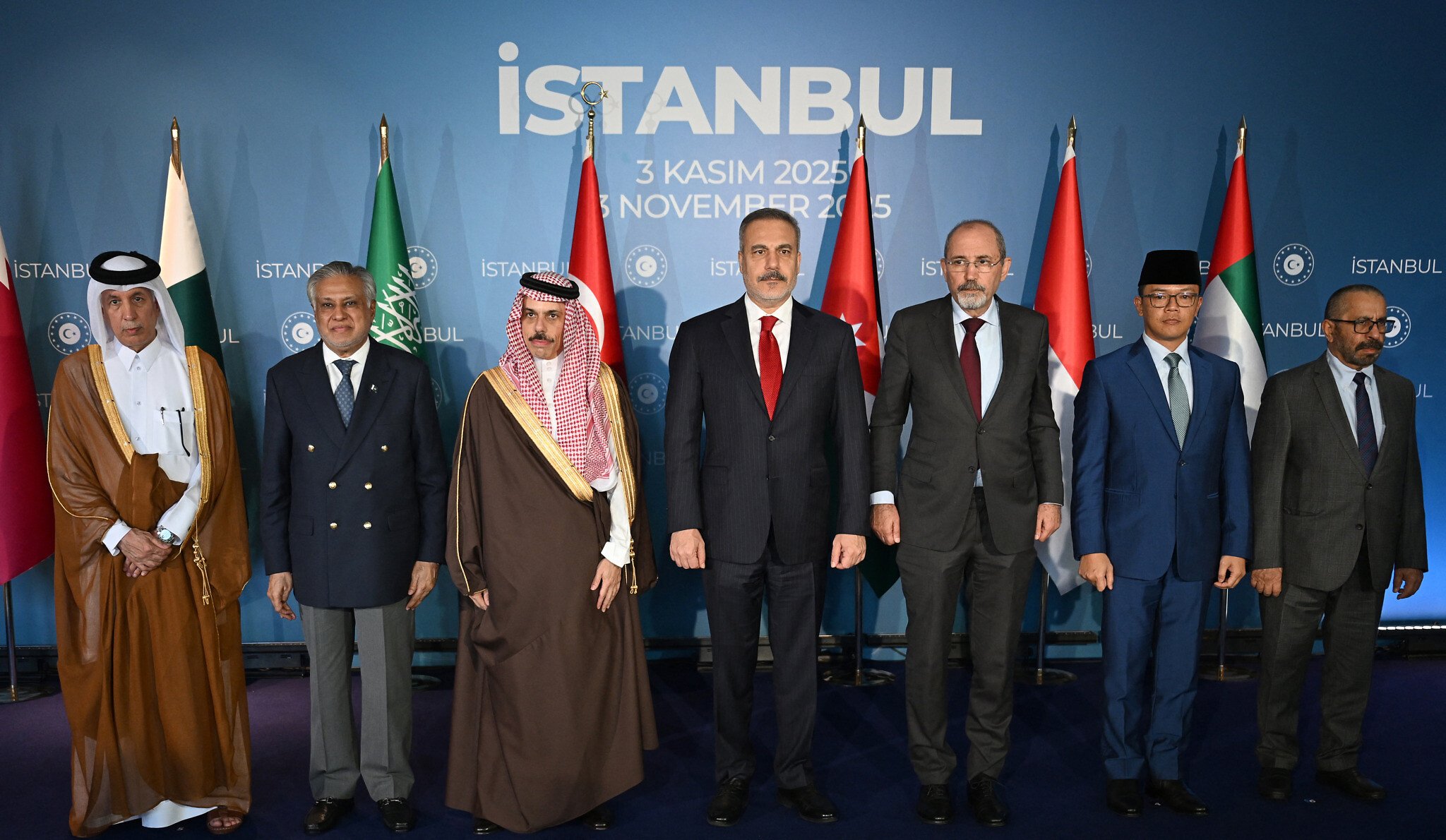
Gaza’s future must be Palestinian-led and avoid any new system of foreign hegemony, Turkey and six of its top Muslim allies said Monday, after talks in Istanbul.
Turkey’s relations with Israel collapsed during the Gaza war, and it has been a harsh critic of Jerusalem, but it also served as a key mediator of the tenuous three-week-old ceasefire. Now, it is pushing for Muslim nations to bring their influence to bear on the reconstruction and future governance of the embattled Strip.
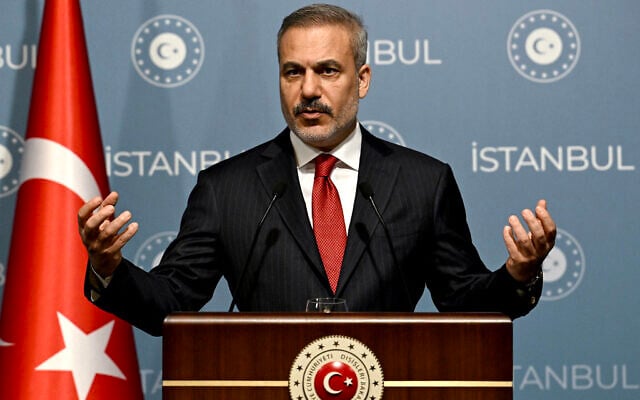
“Our principle is that Palestinians should govern the Palestinians and ensure their own security. The international community should support this in the best possible way — diplomatically, institutionally, and economically,” Turkish Foreign Minister Hakan Fidan said after the talks.
“Nobody wants to see a new system of tutelage emerge,” he told a news conference, using a term meaning foreign supremacy over a territory.
Brokered by US President Donald Trump, the October 10 ceasefire — which halted two years of war sparked by the Hamas-led October 7, 2023, attack — has been tested by Hamas attacks on Israeli soldiers and fresh Israeli strikes.
The talks also involved top diplomats from Saudi Arabia, Qatar, the United Arab Emirates, Jordan, Pakistan, and Indonesia.
All of them were called to a meeting with Trump in September on the margins of the United Nations General Assembly, just days before he unveiled his plan to end the Gaza war. Trump has credited their support with helping build momentum for his peace proposal.
“We’ve now reached an extremely critical stage: We do not want the genocide in Gaza to resume,” Fidan added, saying all seven nations supported plans for the Palestinians to take control of Gaza’s security and governance. Israel adamantly rejects the accusation that it has committed genocide in Gaza.
Fidan, who held talks at the weekend with a Hamas delegation led by its chief negotiator Khalil al-Hayya, said the terror group was “ready to hand Gaza to a committee of Palestinians.”
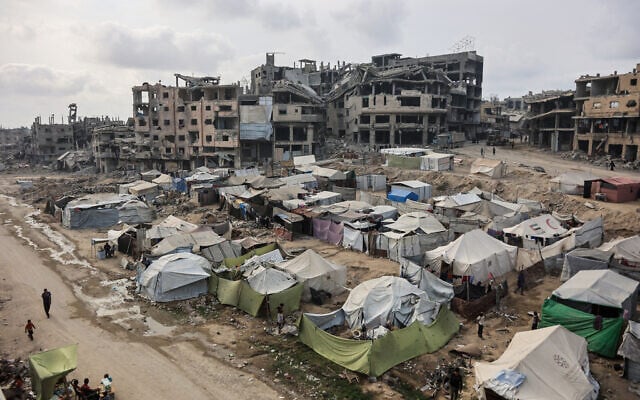
The future makeup of Gaza’s government has been a sticking point in the talks about the enclave. Israel has insisted that neither Hamas nor the Palestinian Authority play a part in running Gaza after the war, but Muslim countries have favored a postwar role for the PA, which currently governs daily life in Palestinian population centers in the West Bank.
Trump’s peace plan calls for a “technocratic, apolitical Palestinian committee” to run Gaza under the supervision of an international body chaired by Trump called the “Board of Peace.” The plan says the PA can assume control of the territory after undergoing reforms, but does not lay out a timeline.
The territory is now split between a region controlled by the IDF in the east and one effectively run by Hamas in the west. The peace plan calls for Hamas to disarm, which Trump has repeatedly demanded, but which the terror group has not agreed to do.
Fidan expressed hope that long-running reconciliation efforts between Hamas and the PA “will bear fruit as soon as possible,” saying inter-Palestinian unity would “strengthen Palestine’s representation in the international community.” Multiple previous attempts at PA-Hamas unity have failed.

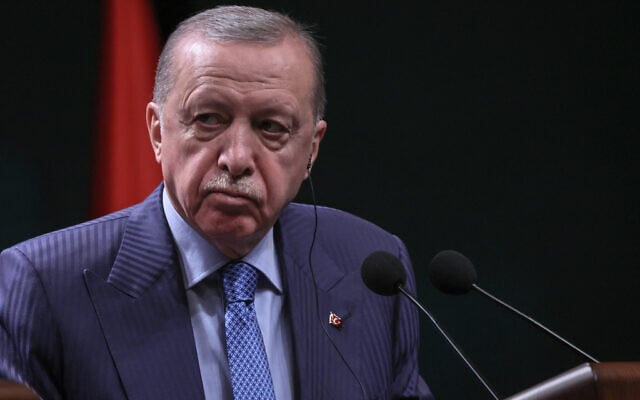
Earlier, Turkish President Recep Tayyip Erdogan, who has praised Hamas, said the group was “determined to adhere to the (truce) agreement” and urged Muslim states to play “a leading role” in Gaza’s recovery.
“We believe the reconstruction plan prepared by the Arab League and the OIC [Organization of Islamic Cooperation] should be implemented immediately,” he said of the plan unveiled in March.
Regarding security in the Strip, Fidan said it was crucial that the planned International Stabilization Force, which will oversee the Gaza ceasefire under Trump’s plan, have a “mandate defined by a UN Security Council resolution and a framework for legitimacy.”
Washington is currently working with Arab and international partners to decide on the composition of the force, with Turkey hoping to play a role. Israel has long viewed Turkey’s diplomatic overtures with suspicion over Ankara’s close ties with Hamas, and adamantly opposes its joining the force.
A Turkish disaster relief team, sent to help efforts to recover the remains of those trapped under the rubble — including deceased Israeli hostages kidnapped in the October 7 attack and held by Hamas — has been stuck at the border because of Israel’s refusal to let them in, according to Ankara.
Azerbaijan is said to have expressed interest in participating in the ISF, and Indonesia has offered to do so.
“The countries we’ve spoken with say they will decide whether to send troops based on … the ISF’s mandate and authority,” Fidan said. “First, a general consensus needs to be reached on a draft, then it needs to be approved by the members of the Security Council.
“And it needs to be free from vetoes by any of the permanent [UNSC] members,” he added, referring to the US, a permanent Security Council member, which frequently vetoes resolutions in alignment with Israel.