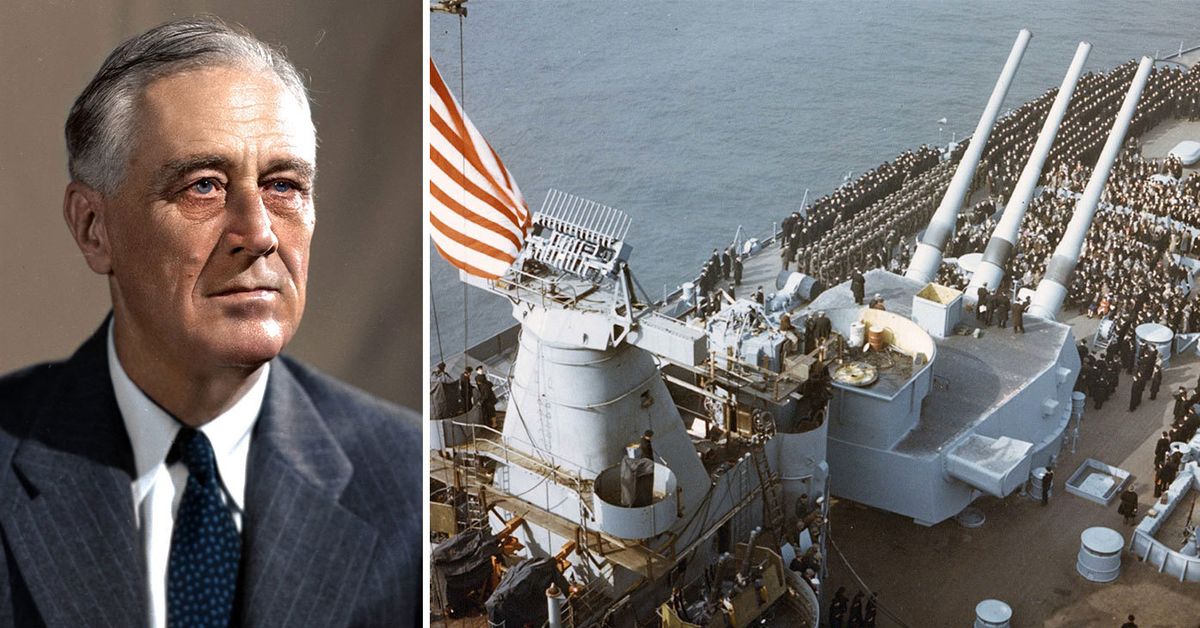
US President Franklin Roosevelt came close to dying in a massive explosion thanks to a serious blunder on November 14, 1943.
Roosevelt was inspecting a series of naval drills on board the battleship USS Iowa.
Destroyer USS William D Porter was tasked with simulating a torpedo launch at the Iowa.
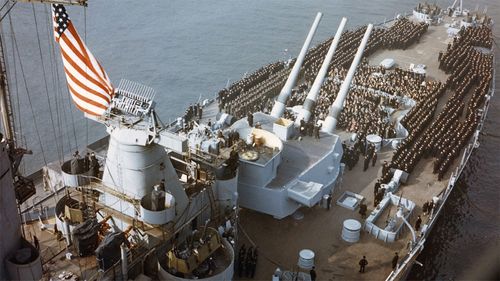
But a live torpedo was mistakenly fired from the Porter directly at the battleship.
Under strict orders not to break radio silence, the Porter relayed a message via a signal lamp about the incoming torpedo.
But the message was misread and the Iowa did not react as it should.
As the torpedo closed in, the Porter radioed the larger ship with a coded message.
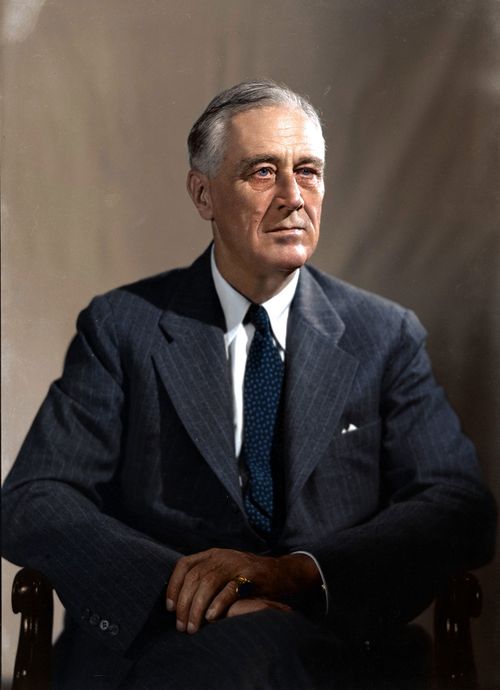
The Iowa turned hard to avoid the torpedo and trained its own bigger guns on the Porter.
In the moments afterwards, senior military figures feared the launch was a genuine assassination attempt.
Meanwhile, Roosevelt keenly ordered his Secret Service agent to push his wheelchair to the edge of the battleship, so he could see the potential collision.
Nobody had the authority to order the commander-in-chief to a safer position.
Ever vigilant, the agent also drew his handgun as if to shoot the torpedo.
Fortunately, the torpedo missed and detonated 2.7km away.
The serious mistake stemmed from the failure to remove the torpedo’s primer. The man responsible, Chief Torpedoman Lawton Dawson, was sentenced to hard labour for his blunder.
But Roosevelt intervened and pardoned him.
The torpedo launch was the third major mishap from the Porter in as many days.
Two days earlier, its anchor damaged another destroyer during manoeuvres.
And on November 13, a depth charge dropped into the rough sea, triggering evasive manoeuvres from other ships out of fears a German submarine was in the area.
But the ship and its crew remained in service until June 10, 1945, when it was destroyed by a kamikaze attack.
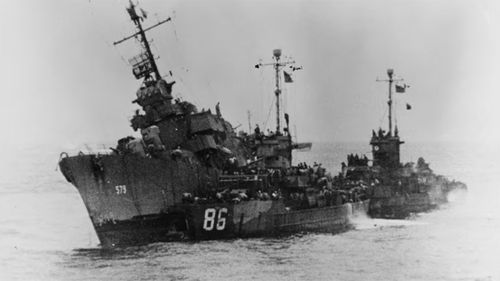
A Japanese dive bomber missed the ship but exploded underneath it, causing catastrophic damage.
After three hours, the destroyer sank, but nobody but the kamikaze pilot was killed.