Monday, December 1, 2025
  • Login
198 Indonesia News
No Result
View All Result
  • Home
  • VIDEO NEWS
  • BUSINESS NEWS
  • FEATURED NEWS
    • INDONESIA USA TRADE NEWS
    • INDONESIA UK NEWS
    • INDONESIA NIGERIA NEWS
    • INDONESIA EU NEWS
    • INDONESIA AFRICA NEWS
    • INDONESIA RUSSIA NEWS
    • INDONESIA GULF NATIONS NEWS
    • INDONESIA INDIA NEWS
  • POLITICAL NEWS
  • MORE NEWS
    • TECHNOLOGY NEWS
    • IMMIGRATION
    • INDONESIA EDUCATION NEWS
    • INDONESIA VENTURE CAPITAL NEWS
    • INDONESIA JOINT VENTURE NEWS
    • INDONESIA MANUFACTURERS
    • INDONESIA BUSINESS HELP
    • INDONESIA UNIVERSITIES
    • 198INDONESIA MEDIA TRAINING
    • 198 TILG INDONESIA CEO NETWORKS
  • ASK IKE LEMUWA
  • REGISTER NGO
  • CONTACT US
  • Home
  • VIDEO NEWS
  • BUSINESS NEWS
  • FEATURED NEWS
    • INDONESIA USA TRADE NEWS
    • INDONESIA UK NEWS
    • INDONESIA NIGERIA NEWS
    • INDONESIA EU NEWS
    • INDONESIA AFRICA NEWS
    • INDONESIA RUSSIA NEWS
    • INDONESIA GULF NATIONS NEWS
    • INDONESIA INDIA NEWS
  • POLITICAL NEWS
  • MORE NEWS
    • TECHNOLOGY NEWS
    • IMMIGRATION
    • INDONESIA EDUCATION NEWS
    • INDONESIA VENTURE CAPITAL NEWS
    • INDONESIA JOINT VENTURE NEWS
    • INDONESIA MANUFACTURERS
    • INDONESIA BUSINESS HELP
    • INDONESIA UNIVERSITIES
    • 198INDONESIA MEDIA TRAINING
    • 198 TILG INDONESIA CEO NETWORKS
  • ASK IKE LEMUWA
  • REGISTER NGO
  • CONTACT US
No Result
View All Result
198 Indonesia News
No Result
View All Result
Home BUSINESS NEWS FROM AROUND THE WORLD

Why an ASEAN power grid is key to tapping Southeast Asia’s green potential

by 198indonesianews_v2w0tn
November 26, 2025
in BUSINESS NEWS FROM AROUND THE WORLD
0
Why an ASEAN power grid is key to tapping Southeast Asia’s green potential
Share on FacebookShare on Twitter


The International Energy Agency reports that energy demand across Southeast Asia rose at twice the global average rate in 2024 and finds that consumption is set to double by 2050. To maintain rising living standards, economies across the region are pushing into higher-value and more energy-intense industries, data centres being one obvious example.

That creates a problem.

The ASEAN nations enjoy vast but as yet largely untapped potential for renewable energy, especially PV solar, and onshore and offshore wind. The IEA puts potential supply at 20 terawatts, roughly 55 times the region’s present generation capacity. And this energy would be cheap. But the increase in overall demand is for now far outpacing new supply from renewables. Until that changes, ASEAN nations remain dependent on rising fossil fuel imports that expose them to price risk, potential supply disruptions, and increasing greenhouse gas emissions.

Asian corporate executives have focused recently on coping with tariffs and trade restrictions, potential supply chain disruptions and geopolitical insecurity—rather than energy and power. In the latest EY-Parthenon Global CEO Outlook survey, Asia-Pacific CEOs expressed greater unease than their peers in Europe and the Americas about geopolitics, macroeconomics and trade. They must not lose sight of how investment in modernizing energy supply and transmission today will provide considerable benefits including, but not limited to, low-cost power. And they should mobilize all sources of finance, private and public, for projects to achieve this.

That is why the recent announcement from the Asian Development Bank, the World Bank and ASEAN of a new financing initiative to support a connected ASEAN power grid (APG) is so important. It comes ahead of an enhanced memorandum of understanding set to be signed later this year by the ASEAN nations to finally realize the vision for a connected grid that has tantalized since the 1990s.

Building it will be expensive, estimated at over $750 billion. But the returns—cheaper and more reliable electricity, enhanced energy security and regional co-operation, lower emissions—will justify the cost, as long as finance can be mobilized.

At the ASEAN ministers on energy meeting in October, the ADB committed up to $10 billion over the next ten years. The World Bank is providing an initial $2.5 billion. The multilaterals will also offer grants, guarantees, political risk insurance and other concessions to attract private capital, as well as technical assistance.

Why has this connected grid not been built already? Partly for technical reasons. ASEAN nations use different voltages in their transmission systems. Their national grids stand at varying levels of sophistication. They employ distinct operating standards and regulatory frameworks. Politics has also played a part. Countries have previously prioritized domestic industrial development and national energy policies.

Increasing urgency around energy transition has shifted those priorities and focused on how to transmit renewable energy from the widely distributed sources that provide it to the consumers that need it, even in other countries. The key now is to progress beyond simply connecting countries’ networks to a more widespread upgrading of national grids.

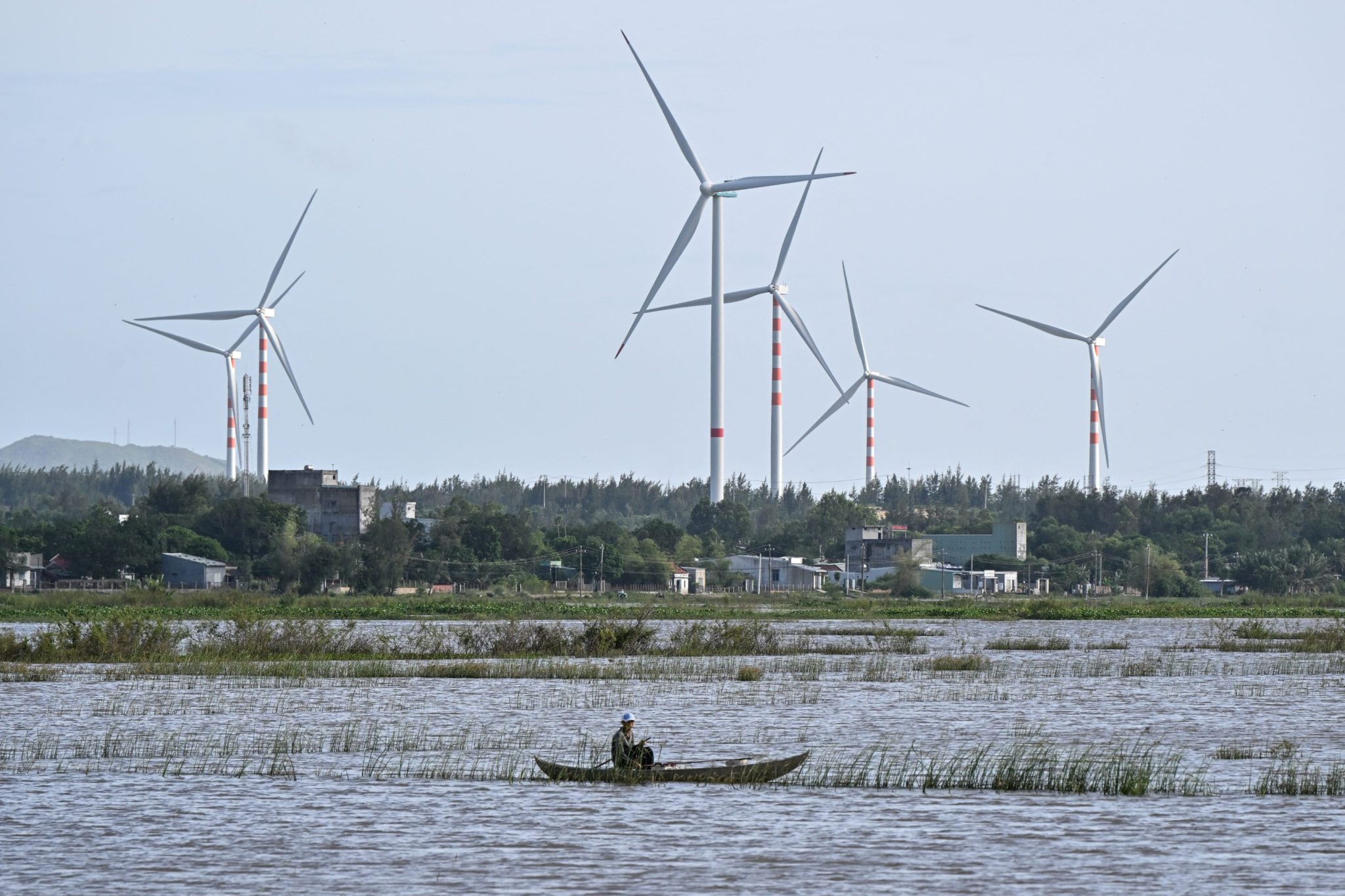
In May, leading energy companies from Malaysia, Singapore and Vietnam agreed a strategic partnership to explore the use of undersea cables to transmit electricity generated mainly from Vietnam’s offshore wind farms through the Peninsular Malaysia National Grid to homes and businesses in Malaysia and Singapore.

Vietnam is prioritizing investment in offshore wind as part of a strategy to become a regional renewable energy hub. Singapore, while lacking the natural resources for large-scale renewables, intends to be a key enabler of cross-border trade in clean energy. It has given conditional approval for ten projects to import it, including solar power from Australia; solar, hydropower and potentially wind power from Cambodia; and solar power from Indonesia; as well as offshore wind from Vietnam. Thailand could be another big importer.

High return on investment

The vision for an ASEAN power grid, connecting a population likely to hit 780 million by 2040 across a $10 trillion regional economy, triple the size in 2022, was laid out one year ago at COP29. Doubling the number of interconnections across the 10 ASEAN countries could boost connected capacity from 7.2 gigawatts in 2022, to 33.5 GW fifteen years from now.

This will take more than undersea cables and high voltage direct current lines capable of transmitting power over long distances with minimal leakage. To succeed at scale a resilient ASEAN grid must cope with the key challenge faced in all renewables—intermittency. This necessitates investments in industrial-scale battery and other storage and conversion technology to balance increasingly variable supply with rising demand. Managing that balance is essential to keep grids stable and prevent outages, including amid extreme weather events that coincide with peak power off-take.

Upgrading domestic networks should include integration of new digital technology, familiar from the internet of things, to monitor and measure systems continuously, spot potential weaknesses before they trip supply, and enable steady maintenance instead of expensive repairs.

An ASEAN power grid paves the way to lower cost manufacturing and enhances competitive advantages, as the region continues to move up the manufacturing value chain.

In the longer term, it can also improve climate-resilient food security and pitch the region into a positive feedback loop. Related investment in agritech might also boost production of biofuel, potentially making air travel greener and helping to decarbonize other sectors that are difficult to electrify.

A significant proportion of total employment across Asia Pacific is in sectors directly impacted by climate, like farming and fishing, putting populations at high risk from global warming and rising sea levels. With the ASEAN grid, governments, large utilities, energy companies and financers are coming together to address this risk, and build a project that promises huge benefits for generations to come.


Source link

Tags: ASEANAsiasgreengridkeypotentialPowersoutheasttapping
Previous Post

Today in History – November 27: Frank Sinatra arrested on an arcane charge

Next Post

Dell, HP, and other tech companies are warning of potential memory-chip supply shortages in the coming year due to demand from the buildout of AI infrastructure (Bloomberg)

Related Posts

Indonesia commits US billion as it joins New Development Bank
BUSINESS NEWS FROM AROUND THE WORLD

Indonesia commits US$1 billion as it joins New Development Bank

by 198indonesianews_v2w0tn
December 1, 2025
UAE approves 3,567 housing decisions worth 3m for citizens in 2025
BUSINESS NEWS FROM AROUND THE WORLD

UAE approves 3,567 housing decisions worth $693m for citizens in 2025

by 198indonesianews_v2w0tn
November 28, 2025
ICL CEO: 400 million people owe their food to our products
BUSINESS NEWS FROM AROUND THE WORLD

ICL CEO: 400 million people owe their food to our products

by 198indonesianews_v2w0tn
November 27, 2025
IN10 Media transforms into The EPIC Company, expands into content ecosystem
BUSINESS NEWS FROM AROUND THE WORLD

IN10 Media transforms into The EPIC Company, expands into content ecosystem

by 198indonesianews_v2w0tn
November 27, 2025
RI pushes nature-based solutions in forestry sector, dy minister says
BUSINESS NEWS FROM AROUND THE WORLD

RI pushes nature-based solutions in forestry sector, dy minister says

by 198indonesianews_v2w0tn
November 26, 2025
Next Post
Dell, HP, and other tech companies are warning of potential memory-chip supply shortages in the coming year due to demand from the buildout of AI infrastructure (Bloomberg)

Dell, HP, and other tech companies are warning of potential memory-chip supply shortages in the coming year due to demand from the buildout of AI infrastructure (Bloomberg)

MiTAC Computing Signs New Distributor Partnership with Redington Limited

MiTAC Computing Signs New Distributor Partnership with Redington Limited

No Result
View All Result

Recent Posts

  • Cyber Monday TV deals include sets from Samsung, LG, Sony and more at all-time low prices
  • A new report has Idaho lawmakers concerned about education spending – Boise State Public Radio
  • Из-за наводнения в Юго-Восточной Азии погибли больше тысячи человек Там три тропических шторма. Фотографии
  • Indonesia commits US$1 billion as it joins New Development Bank
  • Trump willing to release MRI results, but ‘no idea’ which part of body it examined

Recent Comments

  • @gfhhhjrojk on Most Hated Country by Natural Disasters? 😱 #1 Target 🌋🌪️
  • @Kenseithegamingpro on Most Hated Country by Natural Disasters? 😱 #1 Target 🌋🌪️
  • @Okcat-r4o on Most Hated Country by Natural Disasters? 😱 #1 Target 🌋🌪️
  • @hacob451 on Most Hated Country by Natural Disasters? 😱 #1 Target 🌋🌪️
  • @drewp1076 on Most Hated Country by Natural Disasters? 😱 #1 Target 🌋🌪️

Archives

  • December 2025
  • November 2025
  • October 2025
  • September 2025
  • August 2025
  • July 2025
  • June 2025
  • May 2025
  • April 2025
  • March 2025
  • February 2025
  • January 2025
  • December 2024
  • November 2024
  • October 2024
  • September 2024
  • August 2024
  • July 2024
  • June 2024
  • May 2024
  • April 2024
  • March 2024
  • February 2024
  • January 2024
  • December 2023
  • November 2023
  • October 2023
  • September 2023
  • July 2023
  • May 2023
  • April 2023
  • March 2023
  • February 2023
  • January 2023
  • December 2022
  • November 2022
  • October 2022
  • September 2022
  • August 2022
  • July 2022
  • June 2022
  • May 2022
  • April 2022
  • March 2022
  • February 2022
  • January 2022
  • December 2021
  • November 2021
  • October 2021
  • September 2021
  • August 2021
  • July 2021
  • June 2021
  • May 2021
  • April 2021
  • March 2021
  • February 2021
  • January 2021
  • December 2020
  • November 2020
  • October 2020
  • September 2020
  • August 2020
  • July 2020
  • June 2020
  • May 2020
  • April 2020
  • March 2020
  • November 2019
  • July 2019
  • June 2019
  • January 2019
  • December 2018
  • October 2018
  • August 2018
  • July 2018
  • May 2018
  • February 2018
  • December 2017
  • November 2017
  • September 2017
  • March 2017
  • February 2016
  • December 2015
  • January 2015
  • December 2014
  • October 2014
  • February 2014
  • January 2014
  • June 2012
  • March 2012
  • June 2011
  • July 2009

Categories

  • BUSINESS NEWS FROM AROUND THE WORLD
  • INDONESIA AFRICA NEWS
  • INDONESIA BUSINESS HELP
  • INDONESIA EDUCATION NEWS
  • INDONESIA EU NEWS
  • INDONESIA GULF NATIONS NEWS
  • INDONESIA IMMIGRATION NEWS
  • INDONESIA INDIA NEWS
  • INDONESIA JOINT VENTURE NEWS
  • INDONESIA MANUFACTURERS
  • INDONESIA NIGERIA NEWS
  • INDONESIA POLITICAL NEWS
  • INDONESIA RUSSIA NEWS
  • INDONESIA TECHNOLOGY NEWS
  • INDONESIA UK NEWS
  • INDONESIA UNIVERSITIES
  • INDONESIA USA TRADE NEWS
  • INDONESIA VENTURE CAPITAL NEWS
  • Uncategorized
  • VIDEO NEWS FROM AROUND THE WORLD

Meta

  • Log in
  • Entries feed
  • Comments feed
  • WordPress.org
  • Home
  • Disclaimer
  • Privacy Policy
  • DMCA
  • Cookie Privacy Policy
  • Terms and Conditions
  • Contact us

Copyright © 2025 198 Indonesia News.
All Rights Reserved.

Welcome Back!

Login to your account below

Forgotten Password?

Retrieve your password

Please enter your username or email address to reset your password.

Log In
No Result
View All Result
  • Home
  • VIDEO NEWS
  • BUSINESS NEWS
  • FEATURED NEWS
    • INDONESIA USA TRADE NEWS
    • INDONESIA UK NEWS
    • INDONESIA NIGERIA NEWS
    • INDONESIA EU NEWS
    • INDONESIA AFRICA NEWS
    • INDONESIA RUSSIA NEWS
    • INDONESIA GULF NATIONS NEWS
    • INDONESIA INDIA NEWS
  • POLITICAL NEWS
  • MORE NEWS
    • TECHNOLOGY NEWS
    • IMMIGRATION
    • INDONESIA EDUCATION NEWS
    • INDONESIA VENTURE CAPITAL NEWS
    • INDONESIA JOINT VENTURE NEWS
    • INDONESIA MANUFACTURERS
    • INDONESIA BUSINESS HELP
    • INDONESIA UNIVERSITIES
    • 198INDONESIA MEDIA TRAINING
    • 198 TILG INDONESIA CEO NETWORKS
  • ASK IKE LEMUWA
  • REGISTER NGO
  • CONTACT US

Copyright © 2025 198 Indonesia News.
All Rights Reserved.