Last Updated:
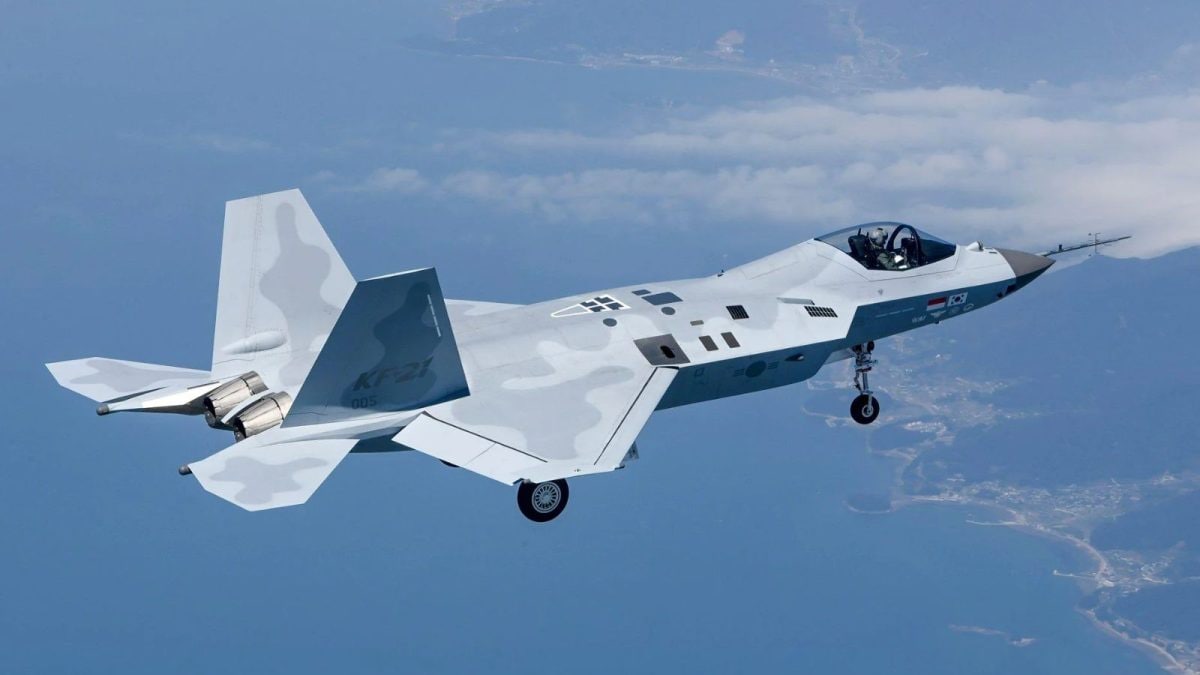
The KF-21 features advanced avionics including AESA radar, fly-by-wire controls and limited stealth characteristics aimed at reducing its radar cross-section

Development began in 2010, and the KF-21 has now completed more than 2,000 hours of test flights.
South Korea has officially entered the elite club of countries capable of building advanced combat aircraft, as its first home-grown fighter jet, the KF-21 Boramae, prepares to enter service this year. The multi-billion-dollar programme, led by Korea Aerospace Industries (KAI), marks a major step towards military self-reliance for Seoul amid regional security concerns.
The twin-engine multirole aircraft, often described as a “4.5-generation” platform, is designed to eventually replace ageing F-4 and F-5 fighters in the Republic of Korea Air Force. Development began in 2010, and the aircraft has now completed more than 2,000 hours of test flights, according to officials. Deliveries to the air force are expected to begin this year, with further upgrades planned in future phases.
The KF-21 features advanced avionics including Active Electronically Scanned Array (AESA) radar, fly-by-wire controls and limited stealth characteristics aimed at reducing its radar cross-section. While the aircraft currently carries weapons on external hardpoints, South Korea plans future variants with internal bays to enhance stealth performance. With a reported top speed of around 2,300 kmph, the aircraft is positioned as an affordable alternative to fifth-generation jets such as the US-made F-35.
The project is being jointly funded with Indonesia, while countries such as the Philippines and Malaysia are also reported to have shown interest. The development comes at a time when South Korea’s defence industry is rapidly expanding its global footprint, following the export success of the K2 main battle tank and K9 self-propelled howitzer.
Analysts say the KF-21 strengthens South Korea’s position in an increasingly competitive regional aerospace landscape, where other nations, including India with its Tejas programme and Turkey with the KAAN, are also pushing indigenous fighter development. China’s J-20 stealth fighter remains a dominant presence in the region, although much of its technology remains classified.
For South Korea, however, the KF-21 represents much more than an aircraft. It is widely viewed as a symbol of technological maturity and strategic autonomy as the country seeks to reduce reliance on foreign suppliers while responding to evolving threats in East Asia.
January 05, 2026, 17:02 IST
Read More