
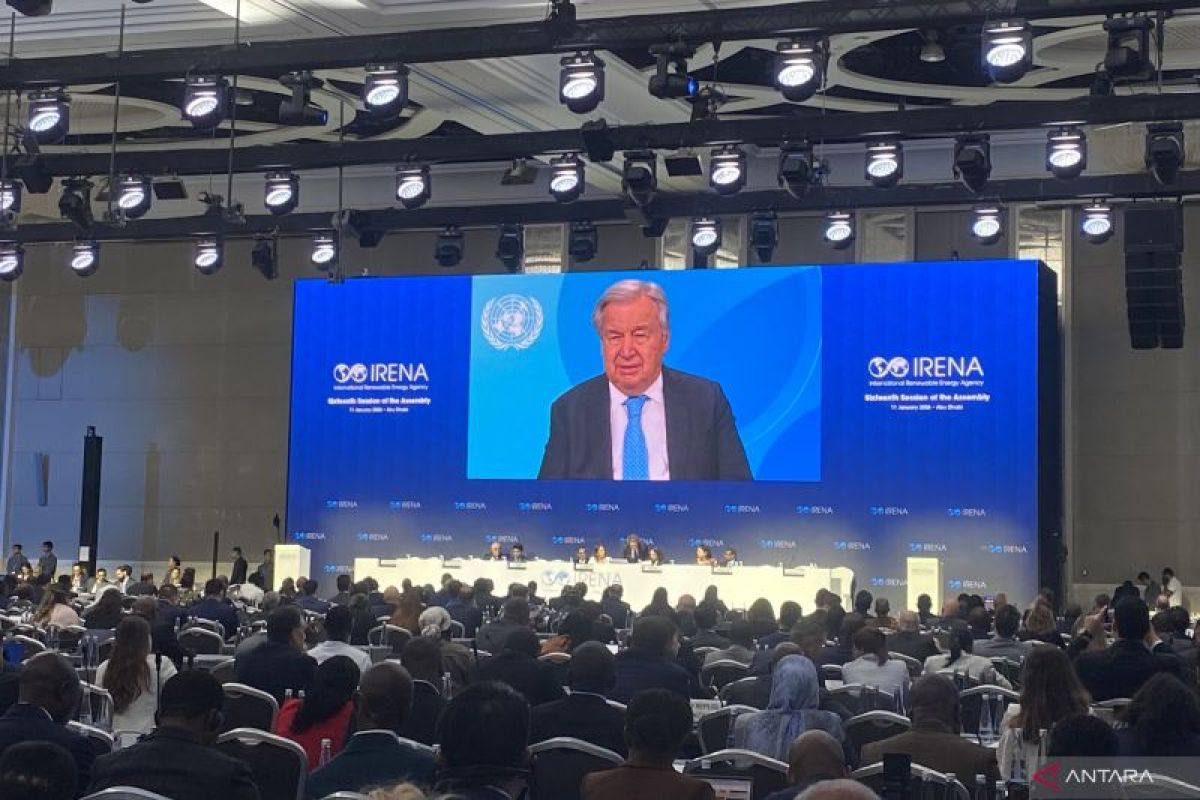
Speaking by video to the 16th International Renewable Energy Agency (IRENA) Assembly in Abu Dhabi, United Arab Emirates, on Sunday, Guterres said the figure was roughly double the amount invested in fossil fuel energy worldwide.
“The clean energy transition is unstoppable and irreversible,” Guterres told delegates, pointing to rapid advances in renewable technologies and falling costs across multiple sectors.
Despite that momentum, he warned that infrastructure development has failed to keep pace with technological progress, threatening to slow the transition if not urgently addressed.
Guterres said that in 2024 the world invested about USD1 trillion in clean power generation, but spending on electricity grids and related infrastructure was less than half that amount.
He cited persistent obstacles including lengthy permitting processes, inadequate grid capacity, bottlenecks in supply chains and rising pressure on critical mineral markets.
Guterres added that many developing countries, particularly in Africa, continue to face major barriers to accessing affordable financing, even though they possess vast renewable energy potential.
To overcome those challenges, he called for massive investment in modern, flexible power grids, stronger cross-border interconnections and a rapid scale-up of battery storage to balance supply and demand and maintain system reliability.
Related news: Indonesia accelerates green investment with new biomethane policies
He also stressed the need to expand electric vehicle charging networks to support the electrification of transport and reduce emissions from one of the world’s largest polluting sectors.
In addition, Guterres urged governments to pursue clear policy and regulatory reforms to make energy markets more efficient, transparent and attractive to long-term investors.
“Governments must provide clear rules, predictable timelines and faster permitting,” he said, adding that policy certainty is essential to unlock private capital at scale.
Guterres reminded participants that the COP30 climate conference in Belém acknowledged the world is likely to temporarily exceed the 1.5 degrees Celsius global warming threshold.
“Our task is clear: make that overshoot as small and as short as possible,” he said, warning that delays would increase long-term climate risks.
Achieving that goal, he said, requires cutting emissions “faster, deeper and everywhere,” including by accelerating the shift away from fossil fuels, rapidly expanding renewable energy and sharply improving energy efficiency worldwide.
Related news: Sustainable energy investment still priority: minister
Reporter: Shofi Ayudiana
Editor: Rahmad Nasution
Copyright © ANTARA 2026