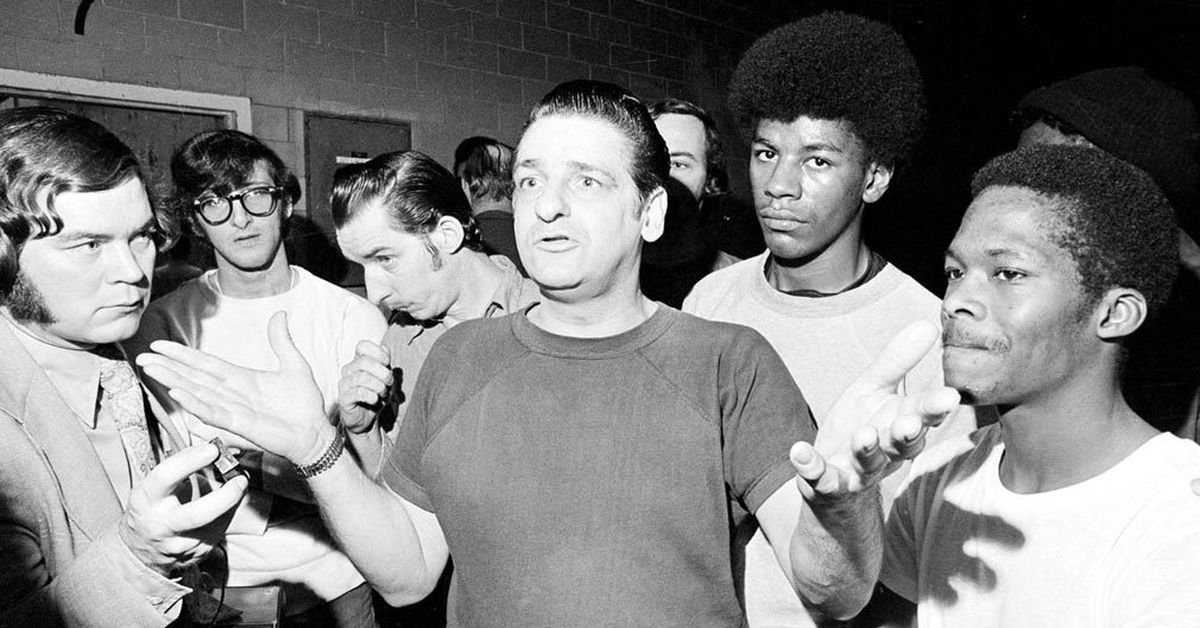
But there were little complaints about his substantial sentence because of who he was long suspected to be.
Over an 18-month period, 13 women were strangled in their apartments by an unknown assailant.

He sexually assaulted her, said “I’m sorry”, and fled.
Police had written off DeSalvo as a suspect in the Boston Strangler case.
But then the lawyer for his cellmate George Nassar, F. Lee Bailey, came forward.
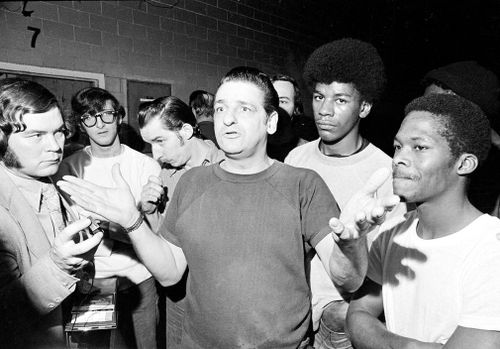
Nassar had claimed DeSalvo had confessed to the spree of murders.
Under hypnosis, DeSalvo told police of the murders he had committed.
He later confessed to police while not hypnotised.
But because of the inconsistencies of his confession and the lack of any physical evidence, he was never charged.
Nevertheless, he would be jailed for life.
But a month later, DeSalvo managed to escape a hospital for the criminally insane.
In a note left on his bunk, DeSalvo told the warden he wanted to escape to draw attention to the poor conditions in the hospital.
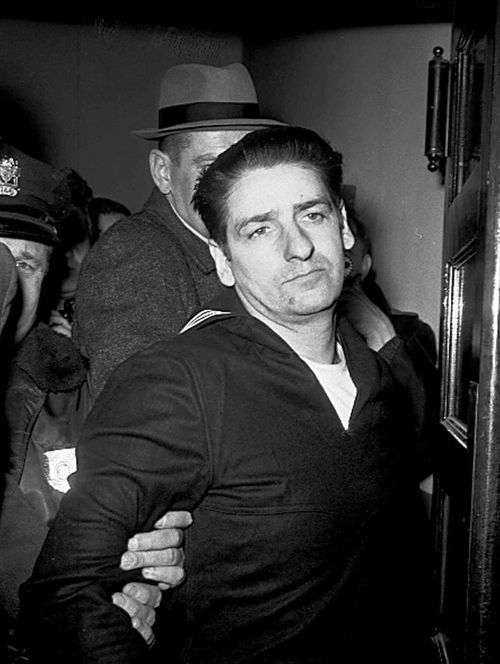
He turned himself in three days later and was taken to a maximum security prison.
Six years later, he was found stabbed to death.
No-one was convicted for the crime, but it is believed he was killed for selling drugs for cheaper than the syndicate price in the prison.
Over the years, sceptics began to doubt that DeSalvo was even the Boston Strangler.
A more likely culprit was cellmate Nassar, according to their prison psychiatrist Ames Robey.
Robey speculated DeSalvo took credit for the murders out of a perverse desire for notoriety.
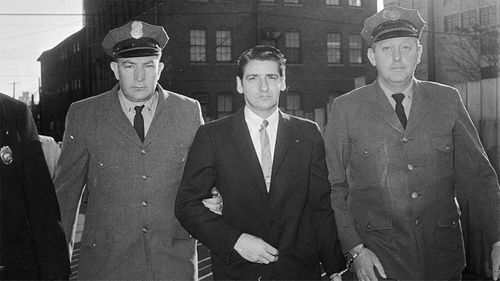
But decades later, the truth was confirmed.
DeSalvo’s body was exhumed to confirm the results.
But whether DeSalvo was responsible for all the cases remains uncertain.